Energy Saving
Energy-Saving Myths That Can Actually Cost You Money
Energy-saving advice is everywhere, but not all of it is accurate. Some tips are outdated, oversimplified, or misunderstood. Others may work in one situation but waste money in another. If you follow the wrong advice, you may end up using more energy, reducing comfort, or spending money on upgrades that do not solve the real problem.
The best energy-saving decisions are based on how your home actually uses energy. That means looking at usage patterns, thermostat habits, appliance behavior, lighting choices, airflow, drafts, and maintenance instead of relying on myths.
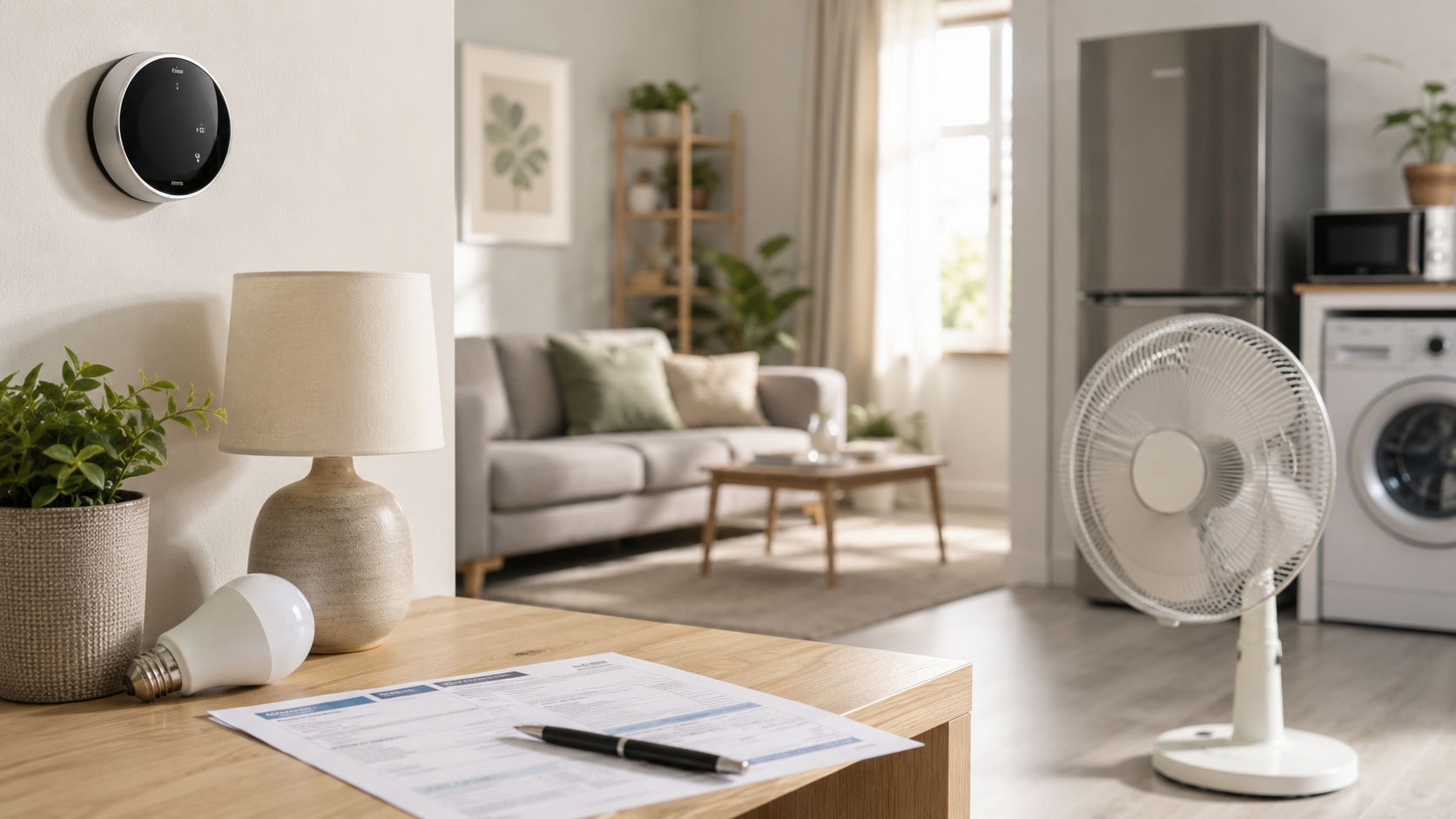
Myth 1: Setting the Thermostat Very Low Cools the Home Faster
A common summer myth is that setting the thermostat much lower will cool the home faster. In many standard home cooling systems, that is not how the equipment works. The air conditioner usually cools at the same rate regardless of whether you set the thermostat a few degrees lower or dramatically lower.
The result is simple: the system may run longer than necessary because it keeps working toward a lower target temperature. That can increase electricity use without improving comfort faster.
What to do instead
- Choose the highest comfortable cooling setting.
- Use fans in occupied rooms to improve comfort.
- Close blinds or curtains before rooms overheat.
- Avoid adding indoor heat during the hottest part of the day.
- Use thermostat schedules if your routine is predictable.
If your home cools very slowly, the problem may be heat gain, poor airflow, dirty filters, low insulation, blocked vents, or HVAC performance. Extreme thermostat settings usually do not fix those underlying issues.
Related guide: How to Reduce Your Electricity Bill in Summer Without Expensive Upgrades .
Myth 2: Fans Cool Rooms Even When Nobody Is There
Fans can make people feel cooler, but they do not actually lower the temperature of an empty room. A fan works by moving air across your skin, which can improve comfort. If nobody is in the room, that comfort benefit disappears.
Leaving fans running all day in empty rooms adds electricity use without reducing the room temperature. In some cases, fan motors can even add a small amount of heat to the space.
What to do instead
- Use fans only in occupied rooms.
- Turn fans off when leaving the room.
- Use fans to support a slightly higher thermostat setting.
- Clean fan blades so the fan works effectively.
Fans are useful when they help you avoid overcooling the entire home. They become wasteful when they run constantly without people benefiting from the airflow.
Myth 3: Leaving Lights On Does Not Matter Anymore
LED lighting has reduced the cost of lighting in many homes, but that does not mean leaving lights on has no impact. The cost may be lower than it was with older incandescent bulbs, but unnecessary use is still waste.
The bigger issue is habit. If a household regularly leaves lights, fans, TVs, monitors, and other devices running in unused rooms, that pattern can contribute to higher energy use over time.
What to do instead
- Turn off lights in empty rooms.
- Replace high-use old bulbs with LEDs where appropriate.
- Use task lighting instead of lighting an entire room when possible.
- Use motion sensors only where they solve a real problem.
Efficient lighting is not only about bulb type. It is also about using the right amount of light in the right place for the right amount of time.
Related guide: LED Bulbs vs Incandescent Bulbs: Cost, Energy Use, and Lifespan .
Myth 4: Standby Power Is Always the Biggest Problem
Standby power can matter, especially when many devices stay plugged in and idle. But it is not always the biggest source of waste. In many homes, heating, cooling, water heating, refrigeration, laundry, and cooking habits have a larger impact.
Focusing only on tiny standby loads while ignoring HVAC runtime or appliance use can lead to misplaced effort. Unplugging a rarely used charger is fine, but it may not matter much if the air conditioner is running longer than necessary every afternoon.
What to do instead
- Start with major systems and repeated daily habits.
- Turn off obvious idle electronics.
- Use safe power strips for grouped devices.
- Review your electricity bill for seasonal usage patterns.
Standby power should be part of a broader energy plan, not the only focus.
Related guide: What Uses the Most Electricity in a Home? A Beginner’s Guide .
Myth 5: Replacing Every Appliance Is the Best First Step
Newer efficient appliances can reduce energy use in some situations, but replacing every appliance is not always the smartest first step. It can be expensive, and the savings may not justify the cost if the existing appliance is still working reasonably well and is not a major energy user in your home.
Before replacing appliances, look at actual usage, age, condition, runtime, and household habits. A poorly used efficient appliance can still waste energy, while a well-maintained older appliance may not be your biggest problem.
What to do instead
- Identify which appliances run most often.
- Check whether an appliance has obvious performance problems.
- Review your bill before and after major changes.
- Improve habits before assuming replacement is necessary.
- Compare replacement cost with realistic savings.
Appliance replacement can make sense when equipment is old, inefficient, malfunctioning, or expensive to operate. But it should be based on evidence, not guesswork.
Myth 6: Closing Vents Always Saves Energy
Some people close vents in unused rooms thinking it will reduce heating or cooling costs. In some homes, this may create airflow problems instead. Forced-air HVAC systems are designed around a certain airflow pattern. Closing too many vents can increase pressure, reduce performance, create comfort issues, or stress equipment.
The impact depends on the system, duct design, number of vents closed, and home layout. It is not a universal energy-saving trick.
What to do instead
- Keep vents and returns clear of furniture and curtains.
- Avoid closing many vents without professional guidance.
- Use doors and airflow carefully instead of blocking system design.
- Contact an HVAC professional if rooms are consistently uncomfortable.
If one room is always too hot or too cold, the issue may be airflow balance, insulation, duct condition, sunlight, or equipment performance.
Myth 7: Space Heaters Are Always Cheaper Than Central Heating
Space heaters can be useful in limited situations, but they are not automatically cheaper. Many electric space heaters use significant electricity. If they are used for long periods or in multiple rooms, they can increase energy costs quickly.
Space heaters also require careful safety practices. They should not be used with damaged cords, overloaded outlets, unsafe extension cords, or near flammable materials.
What to do instead
- Use space heaters only where appropriate and supervised.
- Do not use them as a whole-home heating replacement without understanding cost.
- Follow manufacturer instructions exactly.
- Keep heaters away from bedding, curtains, furniture, and paper.
- Address drafts and poor insulation where possible.
If a room is always cold, investigate drafts, blocked vents, poor airflow, window problems, or HVAC issues before relying heavily on portable heat.
Myth 8: Hand-Washing Dishes Always Saves Energy
Some people assume hand-washing dishes always saves energy. The reality depends on how dishes are washed, how much hot water is used, and how efficient the dishwasher is. Running hot water continuously while hand-washing can use more energy than expected because water heating requires energy.
A dishwasher used efficiently can be a practical option, especially when run with full loads and appropriate settings.
What to do instead
- Run full dishwasher loads when practical.
- Use eco or energy-saving cycles when appropriate.
- Use air-dry settings if they fit your routine.
- Avoid excessive pre-rinsing unless needed.
- If hand-washing, avoid letting hot water run continuously.
The best method depends on your appliance, water heating, habits, and dish load. The myth is assuming one method is always cheaper in every home.
Myth 9: Smart Devices Automatically Lower Bills
Smart thermostats, smart plugs, sensors, and automation tools can help in some homes. But they do not automatically save money just because they are connected. A smart device can only help if it changes behavior, reduces waste, improves scheduling, or makes energy use easier to manage.
Buying smart devices without a clear purpose can add cost and complexity without meaningful savings. Some devices also require privacy and cybersecurity attention.
What to do instead
- Identify the problem before buying a device.
- Use smart plugs only where scheduling or monitoring helps.
- Configure smart thermostats properly.
- Use strong passwords and multi-factor authentication where available.
- Review whether the device is still useful after installation.
Smart devices are tools, not magic fixes. Their value depends on setup and actual use.
Related guide: Smart Thermostat vs Programmable Thermostat: Which One Is Better? .
Myth 10: Maintenance Does Not Affect Energy Use
Maintenance can have a major effect on energy use. Dirty filters, blocked vents, clogged dryer vents, damaged refrigerator seals, leaking faucets, poor airflow, and neglected HVAC equipment can all increase waste.
Maintenance is not always exciting, but it often provides better value than buying another gadget. It can also improve comfort and safety.
Maintenance tasks worth checking
- Replace or clean HVAC filters according to product guidance.
- Keep vents and returns clear.
- Clean dryer lint filters before each load.
- Watch for long drying times.
- Check refrigerator door seals for obvious damage.
- Report leaks, unusual equipment behavior, or damaged fixtures.
If maintenance involves wiring, refrigerant, gas appliances, internal HVAC repair, or safety-sensitive equipment, hire a qualified professional.
How to Avoid Costly Energy-Saving Myths
The safest way to avoid bad advice is to use a simple process: measure, observe, prioritize, and test. You do not need advanced tools for every decision. Start with your utility bill, basic home observations, and repeated habits.
Use this practical process
- Read your electricity bill and track kWh usage.
- Compare current usage with previous months and the same month last year.
- Look for seasonal patterns and unusual spikes.
- Inspect major systems before focusing on tiny loads.
- Make one or two changes at a time.
- Compare future bills using average daily kWh.
Good energy-saving decisions should be practical, safe, and specific to your home. If advice sounds too simple or promises guaranteed results in every situation, treat it carefully.
Related guide: How to Read Your Electricity Bill and Spot Energy Waste .
What to Avoid
Some myths are harmless but ineffective. Others can create safety risks. Be cautious with advice that encourages extreme changes, equipment modifications, or shortcuts around electrical and HVAC systems.
- Do not block required ventilation openings.
- Do not overload outlets, power strips, or extension cords.
- Do not attempt electrical or HVAC repairs unless qualified.
- Do not ignore unusual smells, sparks, leaks, or overheating.
- Do not buy expensive equipment without understanding your usage patterns.
Energy efficiency should never come at the cost of safety, equipment damage, or poor indoor conditions.
Frequently Asked Questions
Can energy-saving myths increase my electricity bill?
Yes. Some myths encourage habits that increase energy use, such as extreme thermostat settings, leaving fans on in empty rooms, relying too heavily on space heaters, or ignoring maintenance problems.
Is turning the thermostat very low the fastest way to cool a home?
Usually no. In many standard home systems, the AC cools at its normal rate. A much lower setting often just makes the system run longer than necessary.
Do fans cool empty rooms?
No. Fans help people feel cooler by moving air, but they do not lower the room temperature. Turn them off when nobody is using the room.
Should I replace every appliance to save energy?
Not always. Replacement can help in some cases, but it is better to first identify actual usage, appliance condition, maintenance issues, and daily habits.
Are smart home devices always worth it?
No. Smart devices are useful when they solve a specific problem, such as scheduling, monitoring, or remote control. They are less useful when bought without a clear purpose.
Final Thoughts
Energy-saving myths can be expensive because they distract from what actually matters. Instead of chasing every popular tip, focus on your home’s real usage: heating, cooling, hot water, appliances, lighting, electronics, airflow, drafts, and maintenance.
The best approach is practical and measured. Read your bill, observe your home, change one habit at a time, and avoid unsafe shortcuts. That is more useful than relying on one-size-fits-all advice.
Continue reading: How to Read Your Electricity Bill and Spot Energy Waste .